

Quick answer
The dry season from December through April offers the most reliable penas blancas safari float weather, with minimal rainfall, clearer water, and predictable wildlife activity along the riverbanks. February and March see the least precipitation, though wildlife remains active year-round. The green season from May through November brings afternoon showers that cool temperatures but can reduce visibility and increase current strength during peak rain months.
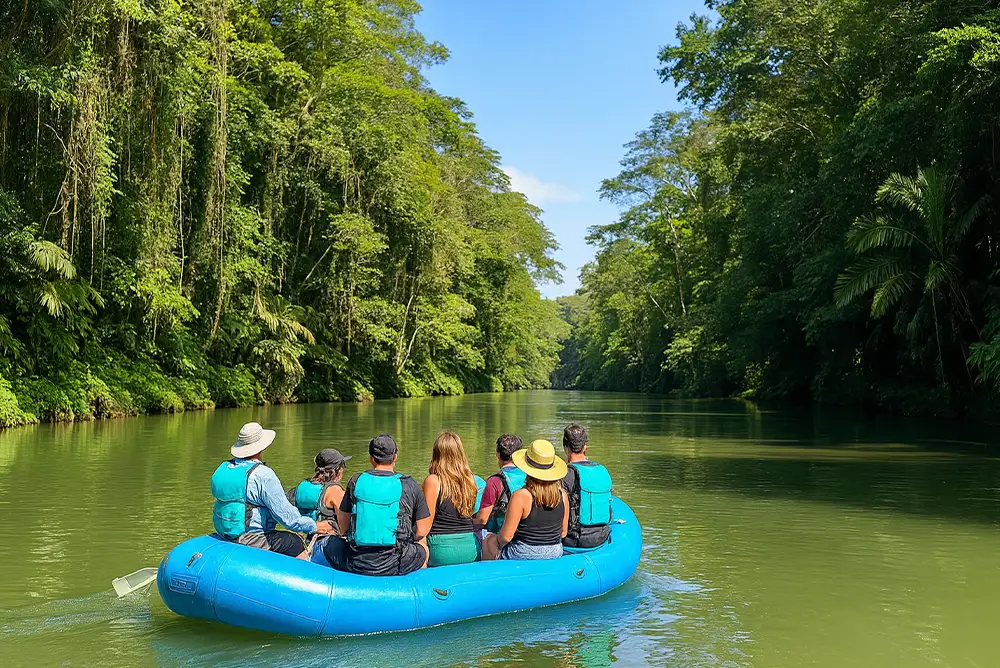
The Peñas Blancas River sits at 200 meters elevation in the San Carlos lowlands, where the Caribbean weather system meets Costa Rica's northern plains. Annual rainfall here averages 3,800 millimeters—among the highest totals in the country—but the distribution across twelve months creates dramatically different river conditions. Dry season runs from late December through April, when the northeast trade winds block Caribbean moisture and the river drops to its most manageable flow. Water clarity improves as sediment settles, making it easier to spot caimans basking on exposed mudbanks and sloths moving through canopy branches that overhang the current. Morning air temperatures hover between 24-28°C, warming to 32-34°C by midday. February and March represent the driest window, with some weeks receiving no measurable rain. Wildlife concentrates near permanent water sources during these months, which improves sighting probability but also means animals are more alert and less predictable in their movements. The transition months of May and November mark the shoulders between seasons. May brings the first consistent afternoon thunderstorms as the Intertropical Convergence Zone shifts north, though mornings often remain clear. River levels begin rising but rarely reach the peak flows of August and September. November reverses the pattern as rains taper and water clarity gradually returns. Both months offer a middle path for visitors weighing cost, crowd levels, and weather reliability. Green season from June through October transforms the river corridor. Rainfall intensifies through July and peaks in September, when the river can rise two meters above dry-season levels and carry significant sediment from upstream tributaries. Tours operate throughout these months—the river never closes—but wildlife viewing shifts to the forest canopy as ground-dwelling species retreat to higher terrain. Howler monkeys and toucans remain visible regardless of rain, and the washed vegetation reveals brighter greens and more active insect life that draws birds to feeding perches. Water temperature stays constant year-round at 24-26°C, but air feels ten degrees cooler during rain events. Cloud cover follows a predictable daily rhythm in both seasons. Mornings from 07:00-10:00 see the clearest skies and lowest humidity, which explains why tour operators schedule most departures within this window. Afternoon clouds build by 13:00 even in dry months, and green-season tours after 11:00 face near-certain rain by 14:00-15:00. The river's lowland position means fog is rare, though mist can linger in the canopy until 08:00 following heavy overnight rain.
“The river's lowland position receives among the highest annual rainfall totals in Costa Rica, but the distribution across twelve months creates dramatically different conditions for wildlife viewing.”
Optimal Timing and Peñas Blancas Safari Float Weather
The best arrival window is 07:00–09:00, which offers higher wildlife activity and cooler temperatures before the onset of midday heat. Aligning your visit with Costa Rica’s distinct seasonal patterns further improves visibility and comfort on the river.
Dry Season (Dec–April)
Moderate; higher in peak monthsSunny, low humidity, avg 28°C
Predictable conditions with minimal rainfall and high visibility.
Green Season (May–Nov)
Lower; fewer visitorsFrequent afternoon showers, avg 27°C
Lush surroundings and active wildlife, though rain gear is necessary.
Weekday Mornings
Lowest crowds of the week—
Consistent access to river tranquility and more frequent wildlife sightings.
Verdict: The best slot for a safari float is a weekday morning during the transition months of April or November to balance weather conditions and visitor volume.
Operating Hours for Peñas Blancas Safari Float Weather Planning
The Peñas Blancas River safari float operates daily to accommodate variable weather conditions and wildlife activity patterns.
| Monday | 07:00–15:00 | |
|---|---|---|
| Tuesday | 07:00–15:00 | |
| Wednesday | 07:00–15:00 | |
| Thursday | 07:00–15:00 | |
| Friday | 07:00–15:00 | |
| Saturday | 07:00–15:00 | |
| Sunday | 07:00–15:00 |
Essential Preparation for Peñas Blancas Safari Float Weather
Weather on the Peñas Blancas River shifts between tropical rain and humidity, so pack gear that keeps you dry and comfortable.
-
Pack a waterproof bag — Sudden rain showers are common and will soak unprotected belongings.
-
Bring quick-dry clothing — Cotton stays wet for hours in the humid rainforest climate.
-
Wear closed-toe water shoes — Rocky riverbanks and slippery surfaces require good traction and foot protection.
-
Apply reef-safe sunscreen before departure — Tropical sun reflects off water and burns exposed skin quickly.
-
Carry insect repellent with DEET — Mosquitoes and biting insects are active along the riverbanks year-round.
-
Secure hats with a strap — Wind gusts on open water sections can blow loose headwear into the river.
-
Book your float in advance — Morning slots fill quickly during dry season when conditions are most favorable.
Check availability
Frequently Asked Questions About Peñas Blancas Safari Float Weather
Everything you need to know about penas blancas safari float weather